

Why Is My Cat Peeing Outside the Litter Box? Common Causes & How to Fix It
Finding a puddle on your carpet, sofa, or even your bed is one of the most frustrating and distressing experiences for any cat owner. It’s easy to feel like your cat is acting out, being spiteful, or "getting back at you" for something. However, it is crucial to understand that cats do not hold grudges or pee outside the box out of malice. In almost every case, litter box avoidance is a cry for help. Your cat is trying to communicate that something is wrong, either physically or emotionally.
Whether it's a hidden medical condition causing pain or a subtle environmental stressor making them anxious, getting to the root of the problem requires patience, observation, and a bit of detective work. Ignoring the problem won't make it go away, and punishing your cat will only increase their stress and likely make the problem worse. This guide will walk you through the most common reasons for inappropriate elimination and how you can use the Felper app to get your household back to normal.
Rule Out Medical Issues First
Before you change your litter brand or move the box, the very first step should always be a trip to the vet. A significant percentage of cats who stop using their litter box are suffering from a medical issue. Cats are masters at hiding pain, and often the only symptom you will see is a change in bathroom habits.
When a cat has a urinary condition, urination becomes painful. They may associate that pain with the litter box itself. In their mind, the box is the "bad place" that hurts them, so they seek out soft, cool surfaces like tile floors, bathtubs, or laundry piles in an attempt to find a more comfortable spot.
- Feline Lower Urinary Tract Disease (FLUTD): This is a catch-all term for conditions affecting the bladder and urethra. It is incredibly common and can be life-threatening, especially in male cats if a blockage occurs.
- Urinary Tract Infections (UTIs): Bacterial infections can cause urgency and severe pain, making it impossible for your cat to make it to the box in time.
- Bladder Stones or Crystals: These can irritate the bladder lining or cause blockages. If you see blood in the urine or your cat is straining without producing much, this is a medical emergency.
- Arthritis and Mobility Issues: For older cats, a litter box with high sides or a top entry can be physically painful to access. If they can't get in comfortably, they will go somewhere easier to reach.
- Kidney Disease or Diabetes: These conditions cause increased thirst and urination. A box that gets dirty too quickly might drive a fastidious cat to find a cleaner spot.
Behavioral Causes: Stress and Environment
If your vet gives your cat a clean bill of health, the issue is likely behavioral. Cats are creatures of habit and can be extremely sensitive to their environment. What looks like a minor change to you might be a major stressor for them.
The "Goldilocks" Litter Box
Cats are very particular about their bathrooms. If the setup isn't "just right," they might go elsewhere. Common complaints from our feline friends include:
- Cleanliness: This is the #1 reason for avoidance. Cats have a sense of smell 14 times stronger than humans. If you can smell the box, it’s overwhelming for them. Ideally, boxes should be scooped twice a day.
- Litter Texture and Scent: Most cats prefer unscented, clumping clay litter. Scented litters are designed for humans, not cats, and can be overpowering. Rough textures like large pellets can also hurt their paws.
- Box Size and Type: Many commercial litter boxes are too small. A cat should be able to turn around comfortably without touching the sides. Covered boxes trap odors and can make cats feel trapped, especially in multi-cat households.
Stress and Anxiety
Anxiety is a huge driver of inappropriate elimination. When a cat is stressed, they may urinate to mark their territory and surround themselves with their own scent, which makes them feel more secure.
- Household Changes: A new baby, a new pet, a roommate moving in, or even rearranging the furniture can trigger insecurity.
- Multi-Cat Conflict: In homes with multiple cats, one cat may be bullying another and guarding the litter box path. If a cat feels they might be ambushed while using the box, they won't use it.
- Outdoor Threats: Seeing a stray cat through the window can cause indoor cats to mark their territory inside the house.
Cleaning Up the Right Way
If your cat has had an accident, how you clean it matters. Do not use ammonia-based cleaners (like bleach), as urine contains ammonia. Using these cleaners might actually encourage your cat to pee there again to "refresh" their scent mark.
Instead, use an enzymatic cleaner specifically designed for pet urine. These cleaners break down the uric acid crystals and pheromones that standard cleaners leave behind. If the scent remains—even if you can't smell it—your cat will return to the scene of the crime.
How Felper Can Help You Solve the Mystery
Litter box issues are rarely caused by a single factor. They usually develop from a combination of health changes, environmental stress, and routine disruptions. Solving the problem requires observing patterns over time — something that’s difficult to do from memory alone.
Felper brings together health logging, reminders, visual analysis, and AI guidance so you can understand what’s happening and take the right steps with confidence.
Track Patterns with the Health Log
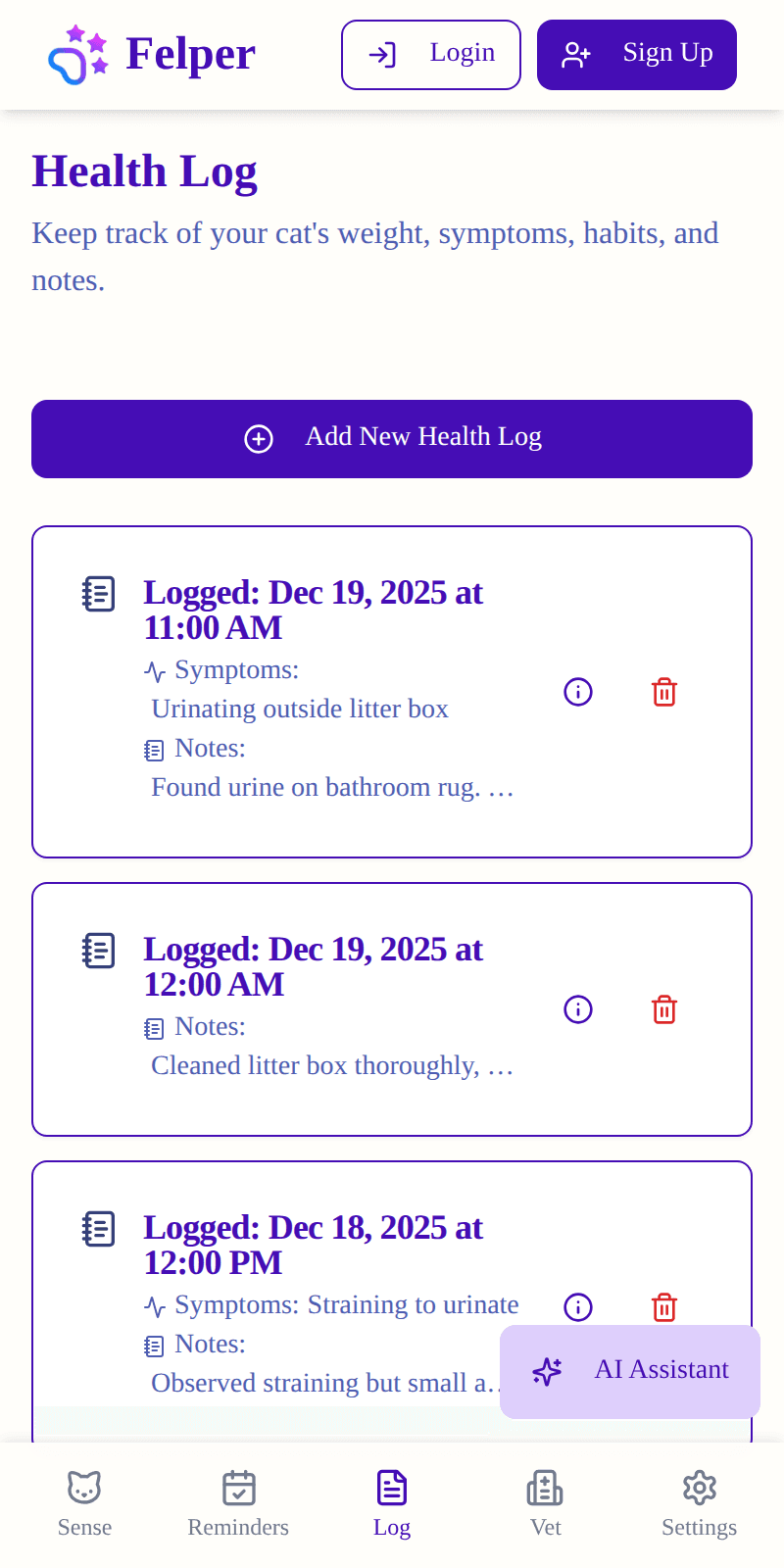
The Health Log helps you capture every detail that might matter, even when the issue feels random. Over time, these small observations often reveal clear patterns.
- Timing and frequency: Note when accidents happen and how often they occur.
- Location patterns: Track whether your cat avoids the box entirely or targets specific surfaces.
- Photos and context: Upload images of the area or urine color, and add notes about recent changes or stressors.
- Symptoms: Log straining, vocalizing, reduced appetite, or changes in behavior.
Having a clear timeline makes vet visits more productive and helps you evaluate whether changes you make are actually working.
Use Smart Reminders to Stay Consistent
Consistency is one of the most important factors when correcting litter box behavior. Missing a cleaning, delaying medication, or forgetting when a change was made can slow progress.
- Litter box care reminders: Stay on schedule with scooping and deep cleaning.
- Medication reminders: Ensure treatments prescribed by your vet are given on time.
- Routine change reminders: Track when you switch litter, move a box, or adjust placement.
- Follow-up reminders: Prompt timely vet check-ins if symptoms continue or return.
This structured approach prevents guesswork and helps you evaluate changes objectively instead of reacting emotionally.
Use Sense to Observe Behavior Visually
Sometimes, subtle body language offers clues that are easy to miss. With Sense, you can record short videos when something feels off and let the app help you observe posture, movement, and signs of discomfort.
For litter box concerns, these short recordings may highlight hesitation before entering the box, stiffness, or movements that suggest pain or stress.
Sense only works when you actively record your cat, making it a focused tool for moments when behavior changes are noticeable — not constant monitoring.
Get Clear Guidance from the AI Assistant
Felper’s AI Assistant brings everything together by analyzing data from your logs, reminders, and Sense recordings.
- Is this behavior urgent or safe to monitor?
- Could stress, routine changes, or discomfort explain what I’m seeing?
- What steps should I try before my vet visit?
Instead of guessing or endlessly searching online, you get guidance tailored to your cat’s real history.
Prepare for Vet Visits with AI-Powered Notes
When litter box issues persist, a veterinary visit is often necessary. One of the hardest parts of these appointments is clearly explaining what has been happening over time.
Felper’s AI-powered vet notes automatically summarize your logs, reminder history, and observations into a clear, structured overview you can share with your vet.
- Symptom timeline: When the issue started, how often it occurs, and whether it’s improving or worsening.
- Behavioral patterns: Locations, triggers, and environmental changes already tested.
- Health context: Signs of pain, mobility changes, appetite shifts, or stress indicators.
- What’s already been tried: Litter changes, box adjustments, medications, or routine updates.
This allows your vet to focus less on reconstructing history and more on diagnosis and treatment.