

Why Is My Cat Breathing Fast? Causes, At-Home Checks, and How Our App Helps You Know When to Worry
Why Is My Cat Breathing Fast? Causes, At-Home Checks, and How Our App Helps You Know When to Worry
Seeing your cat breathe fast can be stressful. Some causes are mild and temporary, while others need quick attention. Before assuming the worst, there are a few simple checks you can do at home — and your Felper AI Assistant can help by analyzing logs, reminders, and short Sense videos to give clarity when you need it.
Why Cats Breathe Fast: Common Causes
Rapid breathing (tachypnea) means your cat is taking more breaths per minute than normal. Resting cats usually breathe 15–30 times per minute. Anything consistently above 40 at rest is typically considered concerning.
Some of the most common reasons include:
- Heat or sun exposure — Warm temperatures, direct sunlight, or stuffy indoor environments can cause mild overheating and faster breathing.
- Stress or anxiety — New visitors, loud sounds, travel, or changes at home can briefly increase breathing rate.
- Pain or discomfort — Injuries or internal issues may lead to rapid, shallow breaths.
- Respiratory infections — Congestion or inflammation make breathing more labored.
- Asthma or allergies — Airways tighten and make each breath harder.
- Heart-related issues — Reduced heart function often increases breathing rate.
- Fluid in or around the lungs — Every breath becomes more difficult and requires more effort.
Simple Checks You Can Do Before Seeking Help
Because cats are experts at hiding discomfort, a structured approach helps you feel more confident. These are reliable steps veterinarians recommend doing first:
- Move your cat to a cool, calm spot — especially if they were sitting in direct sun or near a warm window.
- Watch for open-mouth breathing — this is rarely normal in cats.
- Check their surroundings — new stressors, a fight, visitors, loud noise, or recent exercise.
- Observe for nasal discharge, coughing, or wheezing — these may point to respiratory or allergic causes.
- Look at their belly movements — fast, shallow, or visibly strained breaths are useful clues.
- Count their resting breaths using the steps below or with using Felper's Sense.
How to Check Your Cat’s Breathing Rate at Home
A quick breathing rate check gives a lot of insight. Here’s how to do it manually:
- Let your cat fully settle — ideally while sleeping.
- Count how many times their chest or belly rises and falls.
- Count for 15 seconds and multiply by 4, or for 30 seconds and multiply by 2.
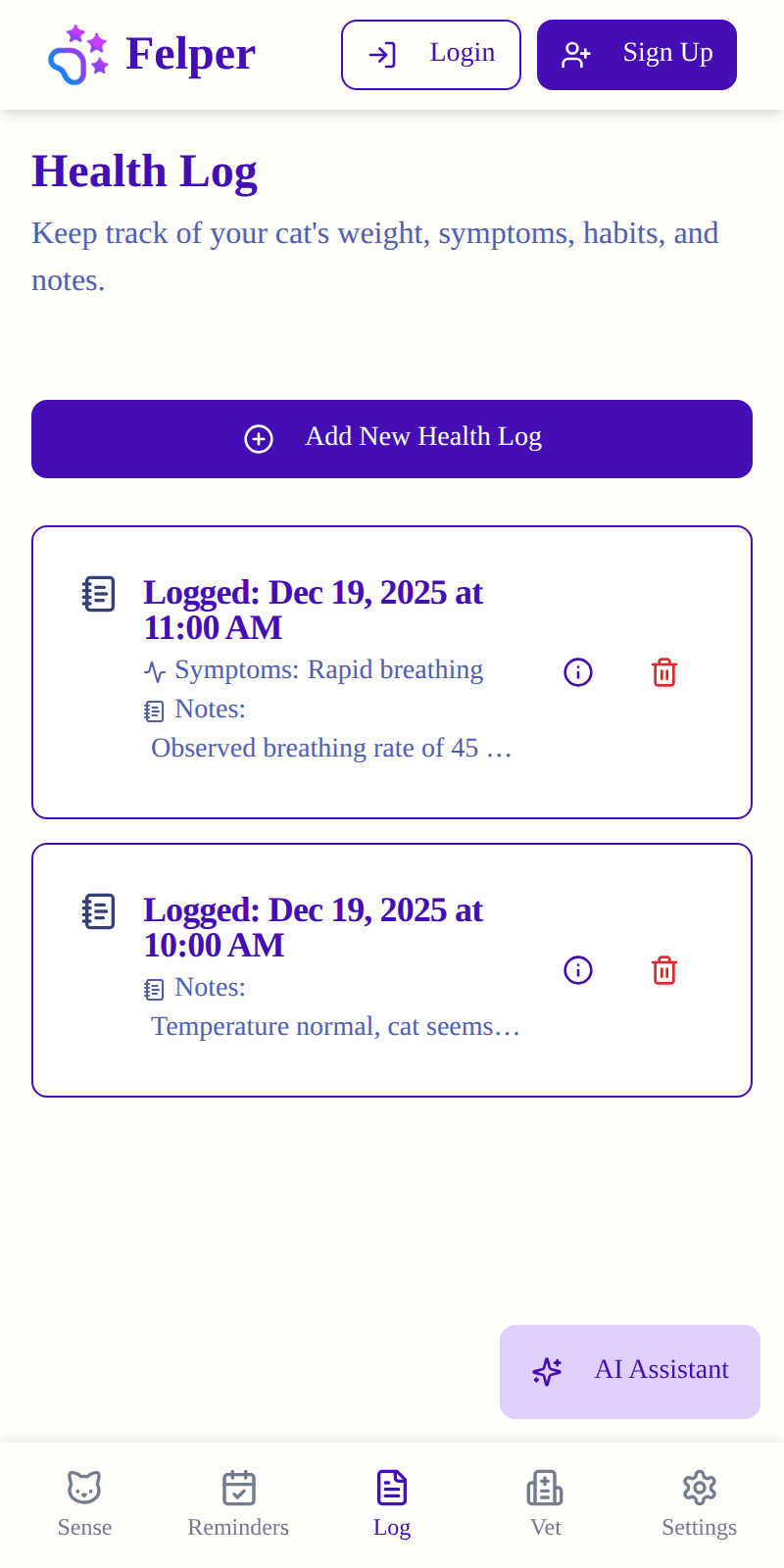
- Write down the number or add it to your cat’s health logs.
How Sense Helps: Breath Counting From a 5-Second Video
If your cat cooperates, you can use Sense to capture a short, 5-second video with the belly clearly visible. The AI analyzes micro-movements to estimate your cat’s breaths during that moment.
To keep things reassuring, the app only highlights the breathing rate when it’s in a potentially concerning range. Otherwise, it simply logs the data to help you spot trends over time.
How Logs and Reminders Help You Understand What’s Normal
Sometimes the context explains everything. By connecting patterns from your logs — like recent play sessions, heat exposure, stressful events, or past breathing notes — the AI Assistant can show whether a fast breathing moment fits a familiar pattern or feels unusual compared to your cat’s baseline.
Reminders help you recheck during calmer moments so you don’t have to remember on your own.
When Fast Breathing Needs Veterinary Attention
You should contact a veterinarian if your cat shows any of the following:
- Persistent breathing over 40 breaths per minute at rest
- Open-mouth breathing
- Blue or pale gums
- Audible wheezing
- A crouched posture with elbows pushed outward
- Refusal to move, eat, or interact
How the App Supports You During These Moments
By combining logs, reminders, and Sense video analysis, the Assistant helps you identify when fast breathing is simply related to heat or stress — and when it may be something more serious. You get clarity before you panic, and better information to share with your vet if needed.